After Destruction, Life
On decay, regeneration, and the strange continuity of life beyond endings. We often imagine
Finding the Human Form in Nature
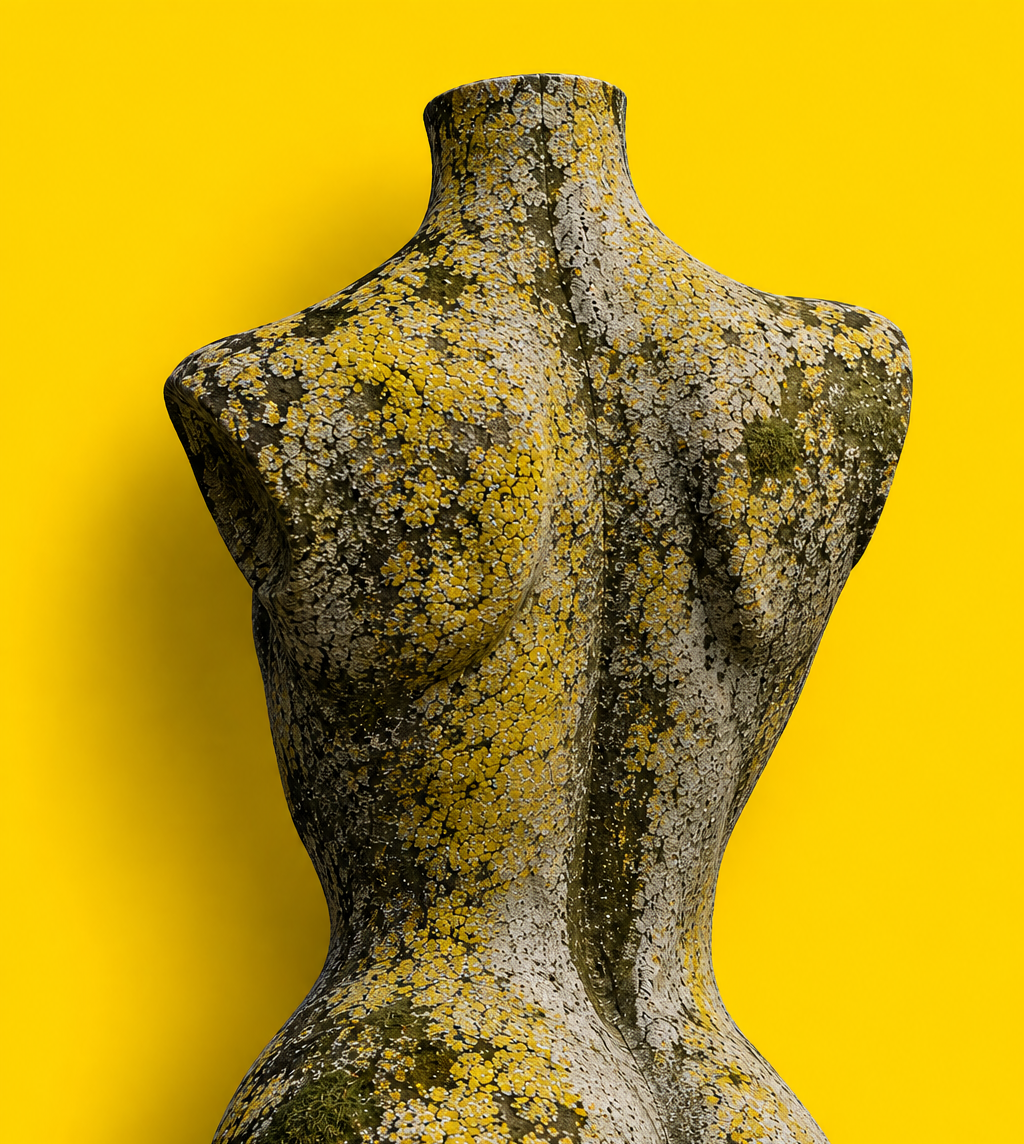
An exploration of the human presence hidden within trees, and the moment observation begins to transform nature into a language of body, form and imagination.
I began photographing trees when I noticed something strangely familiar within their forms. A curve in a trunk could resemble the contour of a body. Two branches might appear like limbs in motion. A fold in the bark could suddenly suggest skin, fabric, or the trace of a figure emerging from within the tree. These forms were never created by me. They already existed. What changed was the way I began to look at them.
As an architect, I have been trained to observe proportion, structure, material, rhythm and the relationship between solid and void. As an artist, however, I am drawn to the moment when those same qualities become ambiguous, when structure begins to suggest something emotional, bodily or imagined. Trees became a meeting point between these two ways of seeing.
The human body and the tree share an unexpected visual language. Both are structured around systems of support and extension. Trunks divide into branches; bodies extend into limbs. Surfaces carry evidence of age, pressure, damage and growth. Nothing is completely symmetrical, yet an underlying order remains.
I became particularly fascinated by the feminine forms I began to perceive within curved trunks and branches. They were not literal representations of women. Often there was no complete figure at all — only a fragment: a gesture, a torso-like curve, the suggestion of legs, or a presence that seemed to exist somewhere between human and botanical. This ambiguity became important to me. I did not want to impose the body onto nature. I wanted to reveal how easily our perception moves between the two.
Photography initially became a way of collecting these discoveries. I would isolate a section of a tree and remove it from the wider landscape. Once separated from its surroundings, scale became uncertain. Bark could become skin. A trunk could become a body. A small organic structure could begin to feel monumental. Over time, photography became only the beginning of the process. I started digitally transforming some of these forms, exaggerating certain structures while preserving others. Elements of sculpture, texture and the human figure began to enter the work. The intention is not to disguise nature, but to explore what might already be latent within it. This process moves somewhere between discovery and invention. I find the form first. Then I allow imagination to continue it.
My architectural background inevitably influences this process. I rarely experience an image as a flat composition alone. I think about depth, scale, materiality, shadow and how a form might occupy space. A fragment discovered on the surface of a tree can therefore become the beginning of something larger: a sculpture, an installation, a spatial environment, or a digital form that could eventually exist beyond the image itself. This is where my interests in art and architecture begin to overlap. I am interested in the possibility that an artwork does not have to remain contained within a canvas or photograph. It can become an environment something we move around, enter, encounter and experience physically.
Perhaps what interests me most about this body of work is that very little needs to be invented for imagination to begin. Nature already contains extraordinary structures. The difficulty is noticing them. Once I began seeing human forms within trees, I could no longer look at them in the same way. Every walk became a process of observation. Every trunk contained the possibility of another figure, another gesture, another story.
The work therefore begins before the photograph is taken. It begins with attention. For me, Finding the Human Form in Nature is ultimately an exploration of perception of the unstable boundary between what exists in front of us and what the imagination allows us to see. Nature provides the structure. The eye discovers the figure. And somewhere between the two, a new form begins to emerge.
Soha K. Poul
Artist & Chartered Architect
Other
On decay, regeneration, and the strange continuity of life beyond endings. We often imagine
On traces, time, and the human desire to leave something behind. There are walls that
language. Painting, for me, has never been simply about reproducing what I see. The visible