
The Walls Remember
On traces, time, and the human desire to leave something behind. There are walls that
After Destruction, Life
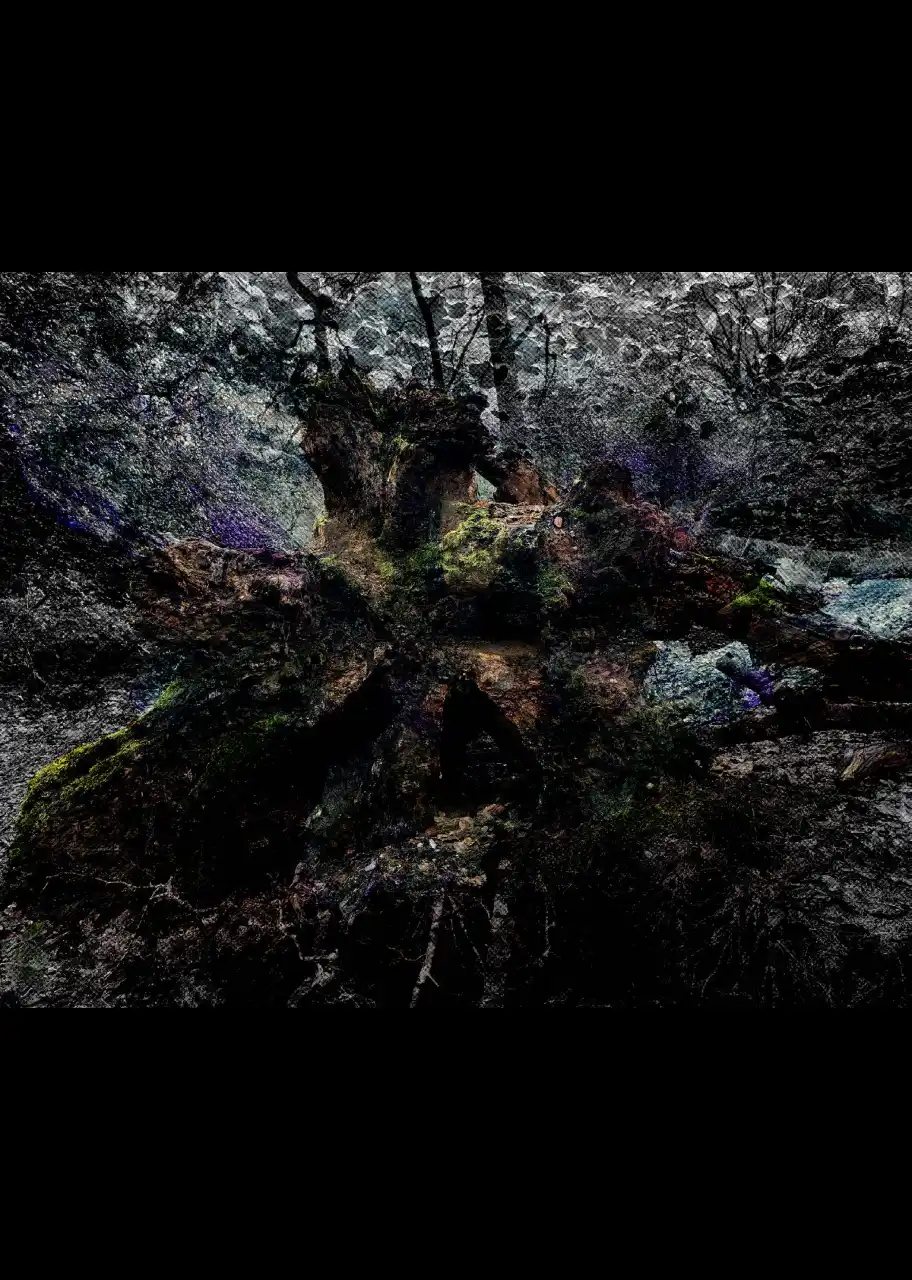
On decay, regeneration, and the strange continuity of life beyond endings.
We often imagine nature as a symbol of life: growth, fertility, beauty and renewal. Yet nature is equally capable of destruction. Winter strips trees of their leaves. Fire consumes forests. Volcanoes bury landscapes beneath ash and lava. Earthquakes fracture the ground. Floods erase familiar boundaries. Storms uproot what may have taken centuries to grow.
To us, these moments appear as rupture – an ending, a before and an after. Yet nature does not seem to understand destruction in quite the same way we do. Again and again, what appears to be an ending becomes the condition from which something else begins.
Human beings have an instinct to preserve. We repair buildings, archive photographs, restore paintings and protect objects from ageing. We try to keep bodies young and memories intact.
Nature behaves differently. It allows things to deteriorate. A tree grows, matures, fractures and eventually falls. Its wood softens. Fungi enter. Insects inhabit it. Moss spreads across its surface. Slowly, the structure that once belonged to one living organism becomes the material through which many others survive.
The tree has died, and yet life around it intensifies. This contradiction fascinates me. What looks like decay from one perspective can look like abundance from another.
I once became fascinated by tiny fungi growing across the remains of cut and weathered tree trunks. From a distance they looked almost like flowers.
There was something profoundly beautiful about this image: delicate new organisms emerging from material we would ordinarily describe as dead. The old trunk was no longer growing upward. Its original life had ended, but it had not become useless. Its decomposition was creating another environment.
That observation changed the way I thought about decay. Perhaps death in nature is rarely an empty condition. It is often a transfer. Matter moves from one form into another. What belonged to one body becomes nourishment, shelter or ground for another. The ending of one structure makes another structure possible.
We often describe spring as though it defeats winter. But spring does not reverse winter. The leaves that fell are not returned to their branches. The flowers that died are not reconstructed. What was lost remains lost. Instead, something new appears.
Regeneration is not restoration.
Nature rarely returns something precisely to what it was before. It continues by transforming it. Perhaps this is why renewal in nature feels so powerful: it does not deny destruction; it incorporates it. The fallen leaves become soil. The dead organism becomes nourishment. The fractured landscape becomes a new geography. The scar remains part of the new form.
There is an uncomfortable beauty in this cycle. A volcanic eruption can destroy an existing landscape while simultaneously producing new geological ground. Fire can devastate an ecosystem while, in some fire-adapted environments, also participating in processes of regeneration.
But this should not romanticise catastrophe. A tsunami, earthquake, wildfire or volcanic eruption can bring immense human suffering. From a human perspective, destruction is real, and grief cannot be reduced to a metaphor of renewal.
Yet when we look beyond the scale of an individual life, another pattern becomes visible. Nature continuously reorganises itself. It builds. It destabilises. It decomposes. It rebuilds. Not necessarily better. Not necessarily worse. Simply differently.
My architectural background makes me particularly sensitive to this idea. Architecture is traditionally concerned with permanence. We design foundations, structures and envelopes to resist gravity, weather and time. A building is expected to remain stable.
But ruins reveal another architecture. Once a structure begins to deteriorate, its original order slowly gives way to another. Walls fracture. Plants enter through openings. Water creates stains. Roots move through masonry. Light reaches spaces it was never intended to enter. Eventually, the boundary between architecture and landscape begins to dissolve.
I find that moment extraordinarily compelling. The ruin is no longer entirely designed by the architect. Time becomes a collaborator. Nature begins to redesign what humans attempted to make permanent.
This idea increasingly enters my artistic practice.
I am interested in the possibility that destruction does not have to represent emptiness. A broken object can become material. A dead tree can become habitat. A ruined building can become landscape. A memory can disappear in one form and return in another.
Even within painting, destruction can become part of creation. A surface can be scraped away. An image can be covered. A composition can be broken apart. A layer I spent hours constructing can disappear beneath another.
At first, this can feel like loss. But sometimes the strongest part of a work appears only after I have destroyed what existed before it. Creation and destruction stop behaving like opposites. They become stages of the same process.
Perhaps we resist this idea because we prefer beginnings to endings. We celebrate birth, construction and growth because they move visibly towards presence. Decay moves in the opposite direction. It reminds us that forms are temporary – including our own.
But nature suggests another possibility. What disappears does not necessarily disappear without consequence. Everything leaves material behind. A fallen tree changes the soil beneath it. A collapsed structure changes the landscape around it. A body returns its matter to systems far older than itself.
Perhaps our obsession with permanence prevents us from recognising another form of continuity: not the survival of the form, but the survival of its consequences.
There is a moment when an old tree trunk becomes difficult to describe. Is it dead wood? A habitat? A garden? A sculpture shaped by decomposition? The answer may be all of them.
And that ambiguity is what draws me to it. I do not see regeneration as a return to an original state. I see it as the emergence of something that could not have existed without what came before.
Nature does not erase the evidence of destruction and begin again on a blank surface. It builds the next world from the remains of the previous one.
Perhaps that is the deeper beauty of renewal. Not that nothing is ever lost. Things are lost. Forms disappear. Structures collapse. Lives end.
But the story of matter continues. And sometimes, from the most exhausted surface, something small begins to grow. Not the life that was there before.
Another life.
Soha K. Poul
Artist & Chartered Architect
Other
On traces, time, and the human desire to leave something behind. There are walls that
language. Painting, for me, has never been simply about reproducing what I see. The visible
An exploration of the human presence hidden within trees, and the moment observation begins to