
After Destruction, Life
On decay, regeneration, and the strange continuity of life beyond endings. We often imagine
The Walls Remember
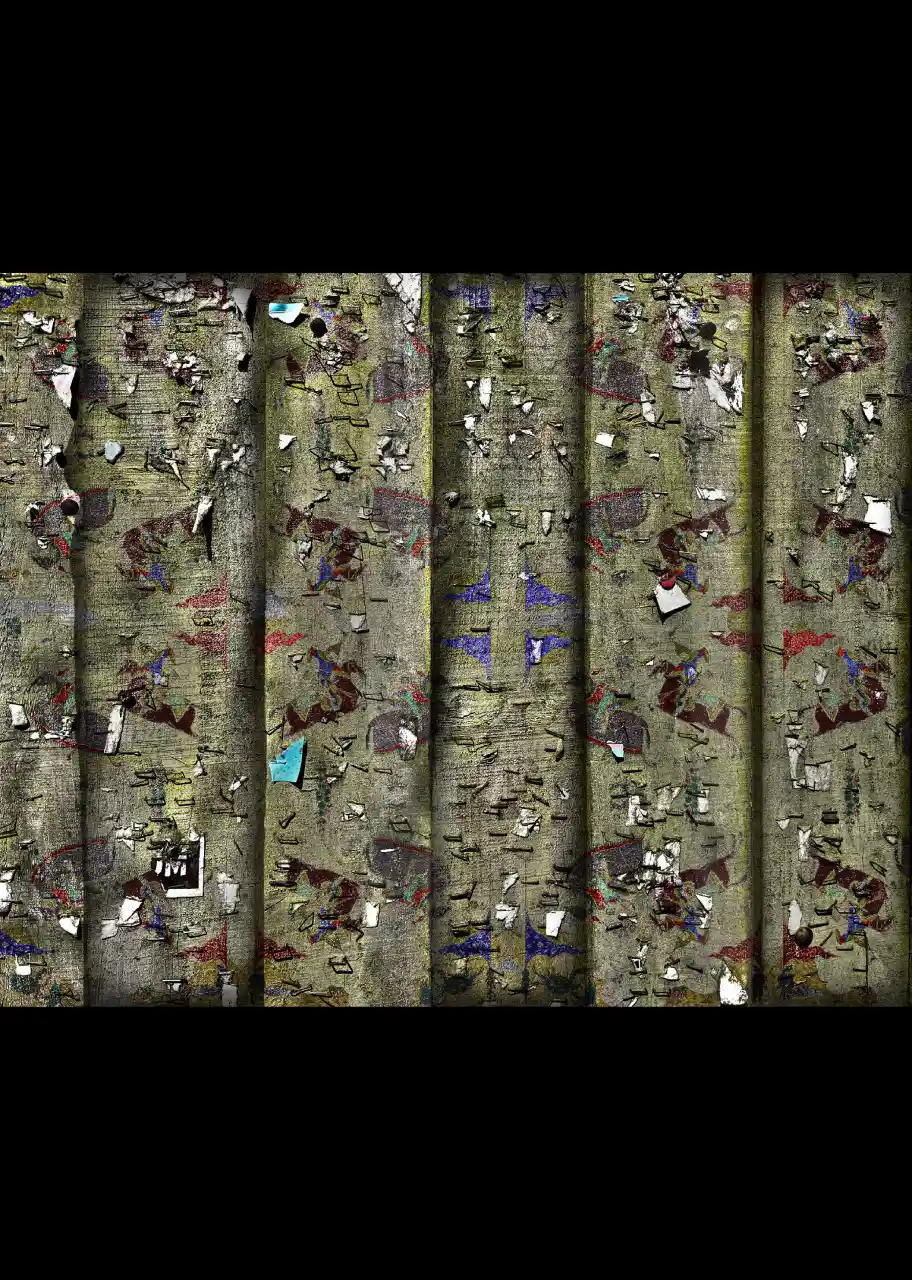
On traces, time, and the human desire to leave something behind.
There are walls that appear empty only from a distance. Look closely, and they begin to reveal their histories. A faded line beneath a new layer of paint. The remains of a word. A crack following an older repair. A fragment of colour that no longer belongs to the present surface. These are small traces, yet they speak of something larger: our persistent desire to leave evidence that we were here. I have become increasingly interested in what remains after human presence has passed through a space. Not monuments or carefully preserved objects, but the accidental archive we leave behind. Walls, surfaces, abandoned structures and altered landscapes quietly collect our presence. They absorb our ambitions, conflicts, beliefs, instructions, protests and dreams. With time, these traces overlap. One generation writes over another. One colour covers the previous one. A new intention occupies the surface of an older desire. And still, something remains beneath.
The Wall as Memory
A wall is usually understood as an architectural boundary.a It separates one space from another. It protects, encloses and defines. But a wall can also become a witness. Over years and decades, its surface records the changing life around it. Posters are attached and removed. Names are written and erased. Paint fades. Political slogans disappear beneath new coats. Children grow up. Buildings change ownership. Streets are reconstructed. The wall remains. What interests me is the moment when architecture stops being merely a physical container and begins to behave like memory. Memory also works in layers. We cover old experiences with new ones. Some disappear almost completely. Others unexpectedly return through a colour, a texture, a smell or a place. Perhaps walls remember in a similar way. Not consciously, but materially.
Beneath the New Paint
There is something strangely powerful about painting over an old wall. A roller passes across its surface and suddenly years of marks disappear beneath a uniform colour. The wall looks new. But it is not new. Its history has simply become invisible. Beneath that clean surface remain previous colours, repairs, scratches, words and perhaps the gestures of people who no longer occupy the space. This act feels almost ritualistic to me. Paint the wall again. Prepare it for another life. Another argument. Another dream. Another battle. We often treat renewal as erasure, but perhaps nothing is ever completely erased. The previous surface continues to exist beneath the next.
A Conversation with Time
This is where my thoughts often return to Omar Khayyam. Khayyam looked at human existence against a much larger measure of time. As both poet and astronomer, his imagination moved between the intimacy of an individual life and the vastness of a universe that continues almost indifferently beyond it. That tension fascinates me. We live as though our concerns are permanent. We build, compete, accumulate, love, argue, demand, create and destroy. We leave messages on walls as if the wall itself might preserve the urgency of the moment. Then decades pass. The argument loses its context. The name becomes unreadable. The person who made the mark disappears. Eventually even the wall may disappear. Yet for a period of time, something remains — a fragment suspended between presence and absence. I find that profoundly human.
What Do We Leave Behind?
Perhaps our relationship with the environment is partly a struggle against disappearance. We want to leave evidence. A building, a painting, a photograph, a sentence and name scratched into stone. We change the spaces around us and, in doing so, ask them to carry a small part of us forward. But time continually edits what we leave behind. It removes context first. Then clarity. Then form. Eventually, what began as a specific message may survive only as texture. And perhaps that transformation is not a failure. A forgotten sentence can become a line. A damaged poster can become colour. A scar in concrete can become composition. Meaning disappears, and another kind of meaning begins.
The Archaeology of the Everyday
As an artist and architect, I find myself increasingly drawn to these ordinary remains. They are a kind of archaeology happening around us in real time.
We do not need to excavate an ancient city to encounter the past. Sometimes history is only a few millimetres beneath the paint of the room we are standing in. A surface can contain several lives simultaneously. This changes the way I look at deterioration. A weathered wall is not necessarily an imperfect version of a new wall. It can be something richer: a surface on which time itself has participated in the composition. Cracks become lines, layers become depth, damage becomes evidence and absence becomes presence.
And Then, Another Layer
Eventually someone arrives with another bucket of paint, the fragments disappear, the surface becomes quiet again and another chapter begins. Perhaps years later someone else will discover a trace of our layer beneath theirs and wonder who was here before them. There is something beautiful in that uncertainty. We spend so much of our lives trying to define ourselves clearly, while time slowly transforms us into fragments. Maybe this is why I am drawn to walls, bark, ruins, weathered surfaces and other forms that carry visible histories. They remind me that permanence may not mean remaining unchanged. Perhaps permanence is simply leaving enough of a trace to become part of what comes next. We arrive. we make our marks, we cover the marks of those before us, and one day, another layer covers ours, the wall remains for a little longer and time continues.
Soha K. Poul
Artist & Chartered Architect
Other
On decay, regeneration, and the strange continuity of life beyond endings. We often imagine
language. Painting, for me, has never been simply about reproducing what I see. The visible
An exploration of the human presence hidden within trees, and the moment observation begins to